About
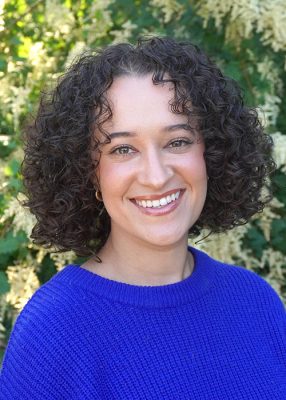
“I study food systems because in order to change a system, you must first understand it.”
Q&A
Why were you interested in pursuing an MPH in food systems, nutrition, and health?
After serving as a Peace Corps volunteer in South Africa, I became aware of the similarities and differences in our food systems and their impact on health outcomes. After nearly 10 years working in marketing and having a background in psychology, I returned to school to pursue a career focused on helping people improve their health through nutrition.
Pursuing an MPH in food systems, nutrition, and health intrigued me for two main reasons: 1) The opportunity to pursue a wider range of career paths as a dietitian with public health experience, and 2) you cannot be an expert in food and nutrition without also understanding food systems and their impact on health.
I was most interested in pursuing a career as a dietitian with a public health focus and wanted to understand how food systems affect individual choices and health outcomes.
Why UW?
When making my decision, UW was one of the few dietetics training programs that offered an MPH degree program coordinated with graduate-level dietetics training. UW also has one of the top public health programs in the country, with extensive opportunities for professional development.
I was looking for a program that could accommodate my interests in nutrition, policy, and education, and UW offers unique opportunities for traineeships, including the Leadership Education in Adolescent Health (LEAH) program and Western Partners in Excellence for Leadership in Maternal and Child Health Nutrition. Coming into the program, I knew I wanted experience working with adolescents to improve health outcomes through nutrition interventions. This involves integrating nutrition, research, policy, and education, which I believe is at the core of public health practice. I am now participating in the LEAH fellowship and exploring these interests through interdisciplinary training at Seattle Children’s Hospital. It feels full-circle to be involved in the opportunities that initially attracted me to UW.
Having the opportunity to connect with faculty involved in research and learn from a network of professionals working across different areas of public health nutrition was another important factor. UW’s faculty are engaged in research focusing on nutrition policy, food systems, and health equity. It was important to me to learn from the people who are actively involved in the work that I’m interested in pursuing.
UW’s dietetics training through the Graduate Coordinated Program in Dietetics also reports a 100% RD exam pass rate which gave me confidence that my time at UW would prepare me for success in being prepared directly after graduation to find a job I love.
Tell us more about your research or practicum.
I am currently working with Dr. Pia Chaparro on my thesis, which explores how differences in state-level SNAP felony drug policies influence access to food assistance among individuals with a felony drug offense. Through this, I’ve been able to combine my interests in nutrition, policy, and health equity while exploring how policy decisions can impact individuals and communities.
In 1996, the Personal Responsibility and Work Opportunity Reconciliation Act (PRWORA) established a lifetime ban on SNAP eligibility for individuals convicted of a federal or state felony involving the possession, use, or distribution of a controlled substance. However, states have the authority to modify or eliminate this ban, resulting in different eligibility requirements across the country. These exclusions can restrict access to food assistance for individuals who already face significant economic barriers. Food insecurity is particularly prevalent among justice-impacted populations, with one study estimating that 91% of recently released individuals experience food insecurity, driven in part by unstable employment and limited income.
Food security is increasingly recognized as a critical social determinant of health, and food insecurity is consistently associated with poorer diet quality, higher rates of chronic disease, and worse overall health across the lifespan.
My research examines how SNAP eligibility policies vary across states and how these differences may create barriers to accessing food assistance during reentry. This research has the potential to inform policy recommendations aimed at improving SNAP access and, ultimately, increasing food security among individuals with a felony drug offense.
Tell us about attending the American Society of Nutrition Conference this year, and the scholarship you received.
I received the 2026 Herbalife Nutrition Scholarship. Receiving this award was more than financial support. It was an opportunity to build professional relationships, and it felt good to be recognized for being myself, speaking honestly about my interests, and sharing my commitment to improving nutrition access for people who are often overlooked.
It was an honor to attend my first national nutrition conference while also being recognized with an award. The award provides support for the research and/or clinical training of a student seeking an advanced degree in nutrition or a related field.
The conference provided an opportunity to learn about current nutrition research and connect with people from across the country. I loved attending alongside other FSNH faculty and students because it provided a sense of community and allowed us to support each other’s work.
Receiving the scholarship also opened doors for professional networking and mentorship. It put me in direct contact with the Herbalife team, whose headquarters are close to my hometown. The team was warm and welcoming and offered ongoing mentorship throughout my time as a student and into my professional career.
As an out-of-state graduate student relying on student loans to fund my education, the financial support from this scholarship has been incredibly helpful as it helped cover a portion of my tuition.
What are your future goals?
I love all things food and nutrition and have a passion for community health and food policy. In the long term, I hope to combine my dietetics training with public health nutrition to support communities and improve access to food.
Describe your experience as a UW Food Systems, Nutrition, and Health graduate student?
Graduate school has taught me that professional development occurs beyond the classroom. It also comes from taking initiative, building relationships, and being willing to pursue opportunities outside your comfort zone.
I’ve gained confidence in advocating for myself, pursuing opportunities, and taking on leadership roles and responsibilities. Through teaching assistantships, fieldwork and practicum projects, and professional development opportunities like the UW Leadership Education in Adolescent Health (LEAH) fellowship and my internship at the Washington State Department of Health, I’ve been able to apply what I’m learning in the classroom to real-world public health practice.
I’ve also had opportunities to network with professionals in the field, including experiences shadowing registered dietitians that led to my involvement with the Greater Seattle Dietetic Association (GSDA).
What’s something you have learned that has changed your perspective?
Nutrition exists beyond the plate and the individual choices people make around food.
Learning about the socioecological model and social determinants of health has helped me develop a framework for understanding the inequities I’ve observed within food systems. These frameworks have helped me recognize how individual food choices are shaped by broader social, economic, and environmental factors, many of which are outside an individual’s control.
Understanding how systems influence individual choices has shifted my perspective on how to collaborate across multiple levels to influence change. Rather than focusing solely on individual behavior, I’ve learned the importance of addressing barriers at the policy, institutional, and community levels to improve health outcomes at a larger scale.
What advice would you give to a student who is considering your programs?
Choosing both MPH and GCPD programs is a rigorous combination that provides opportunities to build professional connections throughout Washington. Your experience in this program will be what you make of it. Opportunities may not always be directly presented to you, but if you’re willing to reach out, ask questions, and go the extra mile, you can open doors to experiences that align with your interests.