Graduate Study
MPH Practicum
MPH in Public Health Nutrition students are required to complete a 6-credit (240-hour) practicum project as part of their degree. The practicum is a planned, supervised, and evaluated field-based experience under the guidance of a site supervisor within a public health organization, and provides students an opportunity to see how nutrition concepts are applied in a public health setting and/or via public health policy. Visit the FSNH Student Projects page to view past practicum projects.
Timeline
- Autumn quarter, year one: MPH in Public Health Nutrition students (“students”) attend the annual FSNH Practicum Session; they do not need to attend the SPH Practicum Orientation held by the School of Public Health (SPH).
- After spring quarter, year one: Students may begin the practicum after completing the first year of coursework. The practicum may be completed during a single quarter or spread over multiple quarters; GCPD students complete the practicum during the practice experience (year two internship).
- Arranging the practicum: The FSNH MPH practicum faculty adviser (“practicum adviser”) will meet with students to identify potential practicum sites the quarter before the students plan to begin the practicum.
- Students planning to begin the practicum during the summer between years 1 and 2 should arrange this meeting during spring quarter, year one.
- MPH + GCPD student practicum meetings will be held in autumn quarter, year two.
- Prior to beginning the practicum: Students must submit a signed Practicum Learning Contract and ensure an educational Affiliation Agreement is in place between SPH and their assigned site.
- About halfway through the project: Students ask their site supervisor to complete and sign the Midpoint Review, then upload it to the SPH Practicum Dropbox. If the scope or timeline of the project have changed, the student should modify and upload a revised version of the learning contract.
- At the end of the practicum: students finalize their project as outlined on their learning contract, complete their SPH deliverables, and submit their practicum materials and Site Supervisor Evaluation to UW for credit.
-
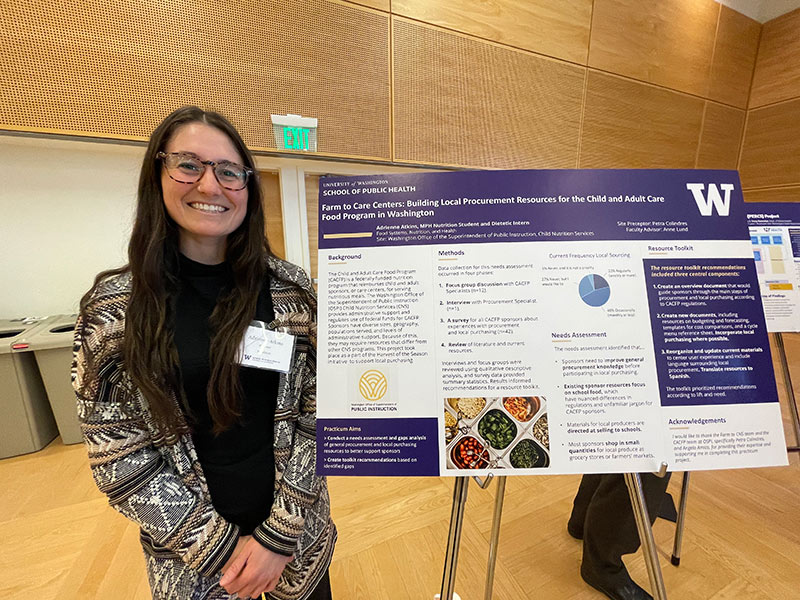
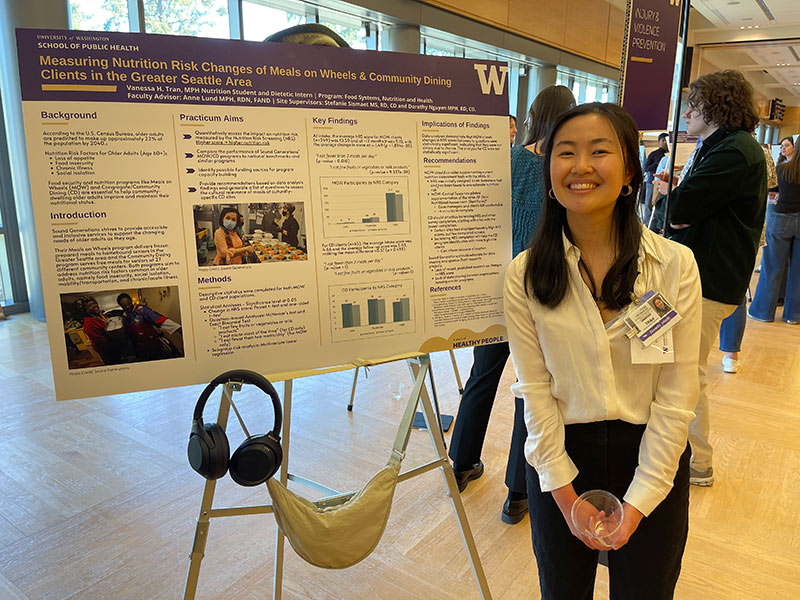
- Complete the deliverables for SPH, including the UWSPH Written Assignment and UWSPH Visual Assignment (poster).
- Visual assignment guidelines
- Students should use the UW SPH research poster template (it and additional SPH-branded templates and logos are available on the SPH website).
- Posters should include the following information: author/title/affiliation, project background and objectives, methods/project activities, results/findings, next steps, acknowledgements (site supervisor name/title), references, and funding source (if applicable). Students should also include photos/graphics and visual data (graph or chart).
- The poster should provide a concise, bulleted summary of the practicum project, rather than a detailed account in full sentences (tips: eliminate extra words, minimize the use of acronyms and abbreviations, and include white space and photos/graphics. Also, limit the use of sensitive information as this will be a publicly searchable document).
- The poster audience includes food and nutrition professionals, the public health workforce, and prospective students.
- Visual assignment guidelines
- Complete the deliverables for SPH, including the UWSPH Written Assignment and UWSPH Visual Assignment (poster).
-
- Submit practicum materials to UW for credit. The following materials should be uploaded to the SPH Practicum Dropbox and emailed to the practicum adviser:
- UWSPH Written Assignment
- UWSPH Visual Assignment (poster)
- Two deliverables developed for the site
- Site Supervisor Evaluation
- Submit practicum materials to UW for credit. The following materials should be uploaded to the SPH Practicum Dropbox and emailed to the practicum adviser:
GCPD students also submit the same materials to their cohort’s Canvas site.
- Autumn quarter, year two: Students with completed practicum projects present their experience at the FSNH Practicum Session.
- Spring quarter, year two: Students are encouraged, but not required, to participate in the annual SPH MPH Practicum Symposium.
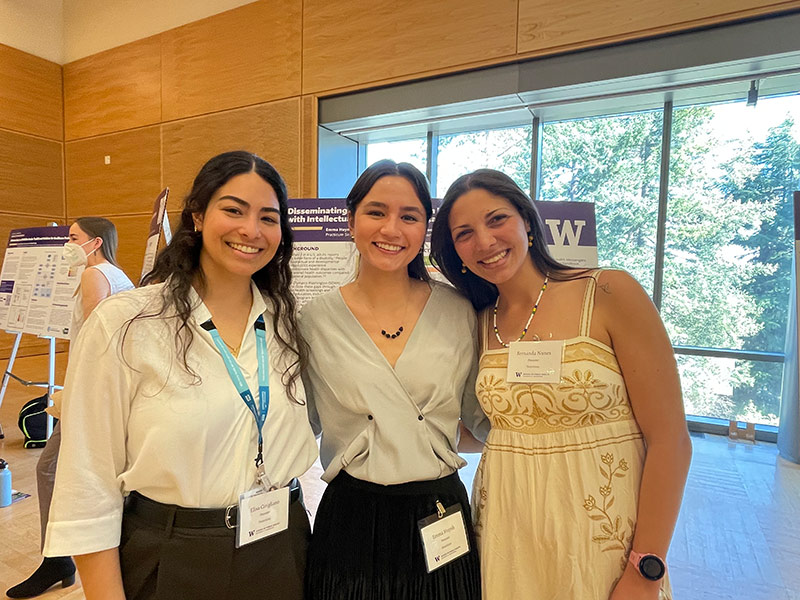
- Summer quarter, year two: Students are invited to present their posters at the FSNH Year-End Celebration (graduation).
Project Guidelines and Requirements
- The practicum adviser assists students in identifying potential practicum sites. To streamline conversations with community partners, students are asked not to contact sites before meeting with the practicum adviser.
- Students are encouraged to select an assessment, policy development, or assurance project (10 Essential Public Health Services or EPHS). Appropriate projects aim to affect the outer rings of the social ecological model. Direct patient care is not allowed.
- Per accreditation requirements, a practicum project must be designed to meet five of the 22 CEPH foundational competencies.
- Students must outline their project and deliverables on the Practicum Learning Contract, which will be reviewed by their site supervisor and practicum adviser prior to being signed.
- SPH has additional practicum resources and documentation requirements, including the Practicum Prerequisite Form, Midpoint Review, and Site Supervisor Evaluation.
- FSNH students must complete a written assignment (practicum report), a visual assignment (poster), and at least two student-generated products (e.g., report, dataset, executive summary, etc.) for their site.
MPH in Public Health Nutrition Students (Degree-Only)
- Degree-only students may begin the practicum at any point after completing their first year of coursework.
- Students may complete the practicum during a single quarter or over multiple quarters.
- Students register for practicum credits via NUTR 595.
MPH in Public Health Nutrition + GCPD Students
- Students also in the GCPD complete the practicum during their 8-month practice experience (year two internship). The practicum rotation meets the requirements of the GCPD Public Health concentration.
- GCPD students complete the practicum via registering for NUTR 561 (not NUTR 595).
- GCPD students upload materials to both the SPH Practicum Dropbox and their cohort’s Canvas site.
- GCPD students completing winter quarter practicum projects submit practicum posters for inclusion at the annual WSAND (Washington State Academy of Nutrition and Dietetics) conference.
International Students
- Before beginning the practicum, students with an F-1 visa must work with UW International Student Services (ISS) to apply for Curricular Practical Training (CPT), which serves as authorization for practical academic training related to the program of study.
- Students with a J-1 or J-2 visa must meet with their program sponsor prior to beginning practical academic training.
Contacts
FSNH MPH Practicum Faculty Adviser
Anne Lund, MPH, RDN, FAND
FSNH MPH Program Director
Director, Graduate Coordinated Program in Dietetics
FSNH Student and Academic Services
305 Raitt Hall
gradnutr@uw.edu
School of Public Health MPH Practicum Program
Janice North
Manager of Experiential Learning
jlnorth@uw.edu
sphpractice@uw.edu
206-685-9975