News & Events
Food Systems alumnus James Sherrell receives UW Excellence in Global Engagement Award
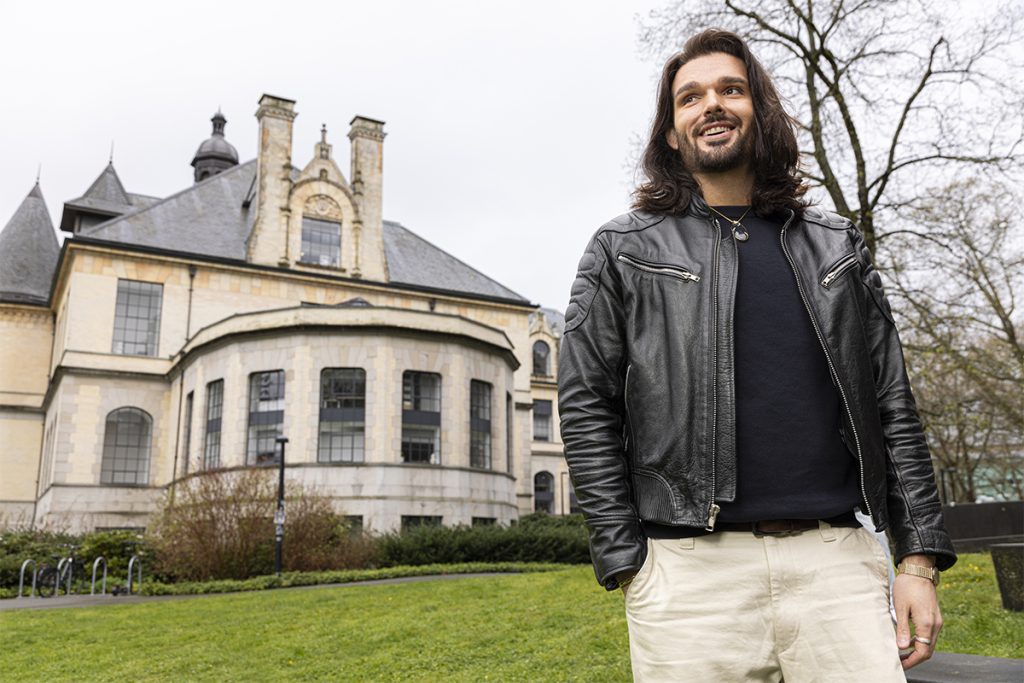
James Sherrell, a project manager at Harborview Medical Center’s EthnoMed and a graduate of the University of Washington Food Systems, Nutrition, and Health Master of Public Health program in the School of Public Health, is the recipient of the 2026 University of Washington Excellence in Global Engagement Award.
This award honors a UW community member whose teaching, research, or community-building activities connect UW students, faculty, and staff to global communities locally, nationally, and internationally, establishing the honoree as a leader in global engagement.
Sherrell was nominated by colleagues for his work at EthnoMed, where he leads projects focused on improving health communication and healthcare access for immigrant, refugee, and migrant communities across King County.
Colleagues say: “James’ leadership in re-envisioning EthnoMed has expanded experiential learning for UW students, residents, and clinicians, while centering the needs of immigrant and refugee communities.”
“Knowing that my colleagues and mentors went out of their way to recommend me, in a place like Harborview, feels like a tap on the shoulder telling me I’m exactly where I’m supposed to be, with exactly the right people,” Sherrell said.
Designing and managing strategic initiatives, leading community engagement efforts, and teaching clinicians, physicians, and students throughout UW Medicine is at the core of Sherrell’s role.
“What I love most about my job is the people,” Sherrell said. “With community partners, I get to sit down with people from across Seattle and King County and learn about their cultures, their journeys to the United States, and what life looked like in their countries of origin as well as here in Washington. Those conversations are so rich and joyful, and I feel lucky to be at the center of that.”
Sherrell believes the work he is doing directly shows how global health principles can be applied close to home.
“This work is so satisfying because it puts global and public health knowledge to use in a deeply local setting, where you’re building materials and approaches in collaboration with the communities who will use them,” he said. “That’s not always how healthcare works, but it’s how it works at its best.”
In 2023, Sherrell worked with EthnoMed for his Master of Public Health—Public Health Nutrition practicum, a 240-hour project working in the field.
His project entailed developing culturally tailored diabetes education materials in eight different languages. During that experience, he found opportunities for new partnerships and strategic initiatives and shared those ideas with EthnoMed leadership.
When a position at the organization eventually opened up, he pursued it.
Stepping into his new role at Ethnomed, Sherrell was given “real creative latitude” to implement essentially what he had previously proposed to them while he was still a student.
In between graduating from UW and starting work with EthnoMed, Sherrell served as a U.S. Presidential Management Fellow at the Centers for Disease Control and Prevention (CDC), supporting public health partners around the world. Across both global and local settings, he has seen the importance of community-driven solutions.
“You are never going to achieve success if you are only willing to paint with a broad brush,” he said. “Each community has to be taken in its own context, and solutions need to drive from their needs and their expertise.”
Receiving the Excellence in Global Engagement Award is especially meaningful to Sherrell now, at a time when the future of global health is being actively debated.
“The people who have dedicated their lives to working across language and culture to address some of the world’s hardest problems will always be needed because those skills apply everywhere, including here in our own community,” he said.
He views the award as recognition not only of his work, but also of the broader mission shared by EthnoMed, Harborview, and their community partners.
“When our university chooses to recognize this kind of work, it matters,” Sherrell said. “It’s a signal that we are not walking away from our values or principles under pressure.”
Sherrell also credits the support he received during his time in the MPH program to help him reach this milestone.
“When I was getting my MPH, it was one of the most difficult periods of my life,” he said. “I had faculty members bending over backwards to help me with everything from extra study sessions and make-up work, to just being there to listen when I needed it. They, along with my incredible cohort, got me through and gave me an incredible foundation for how I will continue to show up in this work moving forward.”
This summer, Sherrell will welcome the largest cohort of UW MPH practicum students in EthnoMed’s history, one of whom is joining from the Food Systems, Nutrition, and Health Program to expand upon and develop materials Sherrell first produced when he was a student.
June 1, 2026