News & Events
How to implement Washington state’s 20-minute school lunch rule
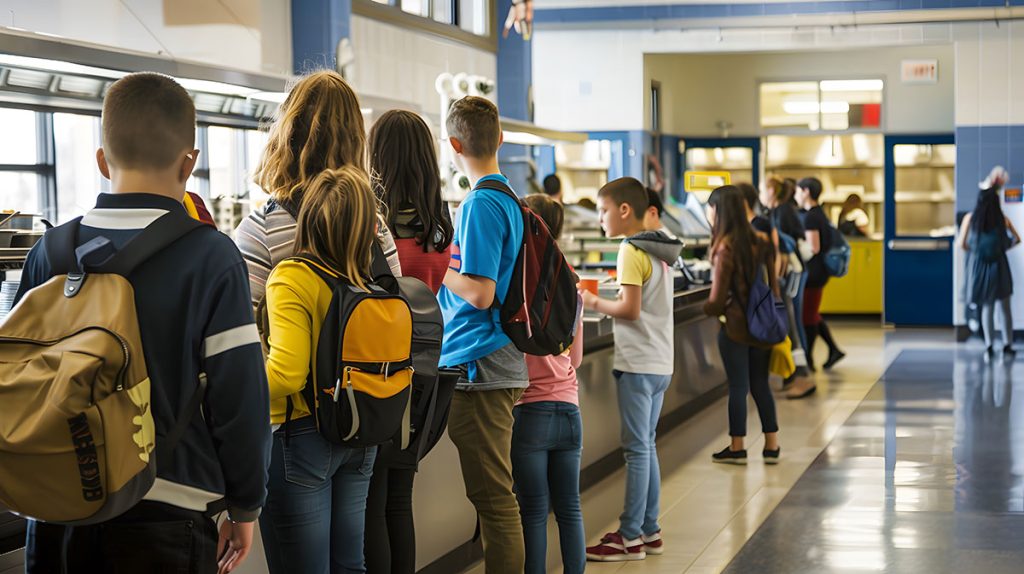
Once served and seated, a student in grades K-5 must have at least 20 minutes to eat.
This is the new requirement for Washington state elementary schools, based on The Time for Meals rule (WAC 392-157-125), which goes into effect in the 2029-30 school year.
The rule requires that schools provide students in grades K-5 with at least 20 minutes of lunch time, with the 20 minutes being counted after the last child receives their meal through the meal service line.
The Washington Office of the Superintendent of Public Instruction (OSPI) approved the rule into law in March 2025, and began assessing preparedness soon after with a state-wide survey during their 2025 School Meals Annual Training.
What the survey respondent data showed was that as of now, lunch period lengths vary across districts in Washington state, with some schools having average lunch periods over 25 minutes and others having lunch periods of less than 14 minutes.
Some of the significant concerns about this new rule is a lack of funding to implement or streamline to meet the requirement.
In autumn 2025, University of Washington graduate students from the Food Systems, Nutrition, and Health program in the School of Public Health partnered with the OSPI to conduct in-depth interviews with district stakeholders to form recommendations to assist with the implementation of this new lunchtime rule.
What the data says about longer lunch times
According to the Center for Disease Control, past research suggests that when elementary and middle school students have more time to eat, they consume more food groups and nutrients. For example, one study found that elementary and middle school students in Massachusetts were more likely to select a fruit and consume more of their entrées, vegetables, and milk if they had at least 20 minutes of seated lunch time.
Similarly, in another study published in JAMA, researchers randomly assigned 38 elementary and middle school-aged children at a summer camp in Illinois to a 10-minute or 20-minute seated lunch condition for a period of 20 days.The results showed that children with 10 minutes of seated lunch time consumed significantly less fruit and vegetables compared to students with 20 minutes of seated lunch time.
Funding for staffing, equipment, and scheduling are challenges for districts
Information gathered by the student research team identified multiple barriers that must be overcome for schools to successfully implement the 20-minute lunch rule by the 2029-2030 school year.
While most parents and administrators agreed that longer lunches are beneficial during the public comment period, Washington school districts vary widely in their operations and constraints, and implementing this rule will require support and adjustment.
“Schools were trying to manage staffing, schedules, and building limitations, often without additional resources. Implementing the policy requires coordination across many roles, not just a decision to extend lunch,” said Michaela Skloven, a member of the student research team.
The students’ research also confirmed the OSPI’s initial assessment: insufficient funding to assist in the transition was a prominent upstream barrier that impacts important considerations like staffing, equipment, and scheduling.
“Each school has unique needs and access to different resources, underscoring the need for adaptable implementation frameworks,” the team cited in their report.
For changes to be successful, respondents shared that input from a variety of stakeholders is needed, as many staff and employees are impacted by how lunch is run, including school nutrition staff, custodial teams, school lunch supervisory staff, teachers, and paraprofessionals.
Recommendations
Key recommendations students made to the OSPI in support of the creation of a toolkit as schools transition towards implementation of the 20-minute lunch rule include:
- Facilitating open communication and strong collaboration between school districts and schools.
- Encourage schools flexibility about lunch service practices.
- Provide clarification of expectations.
- Encourage schools to pilot the 20-minute rule ahead of the 2029 deadline.
The research project was conducted as part of the NUTR 596 Nutrition Practice Capstone course.
Read the final report: “Listening to Schools: Insights to Inform the Development of a Toolkit for Implementing the 20-Minute Lunch Duration Rule in Washington State Elementary Schools.”
Graduate student researchers working on the project include: Katie Allen, Michaela Skloven, Elisa Cirigliano, Anna Schwerdfeger, Emma Huynh, Vanessa Tran, Skyler Austin, and Neelma Skilling. The project faculty advisor is Pia Chaparro, assistant professor in the Health Systems and Population Health department and core faculty in Food Systems, Nutrition, and Health.
February 25, 2026