News & Events
Food Systems students receive 2026 School of Public Health Awards
Congratulations to Carmela Stewart and Norma Garfias Avila, University of Washington students in the Food Systems, Nutrition, and Health (FSNH) program, who have been awarded 2026 School of Public Health Excellence Awards.
This year’s FSNH program recipients have demonstrated high academic achievement and have been inspirational among their peers, faculty mentors, and staff.
Carmela Stewart
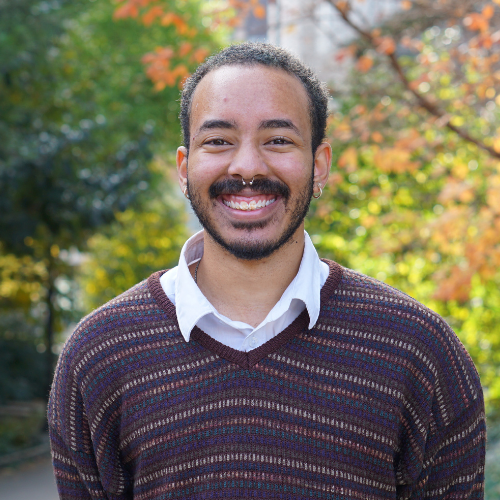
Outstanding Undergraduate Student, Food Systems, Nutrition, and Health program
Carmela Stewart is a senior at the University of Washington, pursuing a major in Food Systems, Nutrition, and Health, and a minor in Bioethics. Throughout his time at UW, he has dedicated his time to volunteering at the UW food pantry, conducting independent research with Dr. Cristen Harris, singing in two UW choirs, and playing percussion in a band. In his role as FSNH student resources coordinator, he has supported undergraduate program engagement, served as a peer adviser, and established the Food Systems Leadership Coalition (FSLC), in which he has cultivated community and built enthusiasm for and connections between numerous student-led groups and community partners throughout Seattle.
Stewart’s leadership with the FSLC led to a series of highly successful events, including two food drive concerts, which combined creativity with service to address food insecurity, as well as a large-scale tabling fair in the Quad that featured 20 different food-related student organizations. Steward was also instrumental in creating social media content to promote engagement around food-related events, ideas, and issues.
“What sets Carmela apart is his rare ability to bring people together around a shared purpose. He is an exceptional community builder, truly one of the best I have encountered. His leadership is both natural and effective. He inspires others, fosters collaboration, and creates spaces where individuals feel valued and motivated to contribute,” said Michelle Averill, FSNH program director and professor.
Jennifer Otten, FSNH undergraduate program director, adds: “Carmela has brought together multiple food-related student organizations across campus and created a truly supportive and collaborative community. He stepped into leadership to connect and lift his entire community and has created space for others to contribute, ensured that multiple voices are heard, and fostered an environment where collaboration—not competition—is the norm. The result is a vibrant and engaged network of students working toward shared goals related to nutrition, sustainability, and equity.”
Norma Garfias Avila
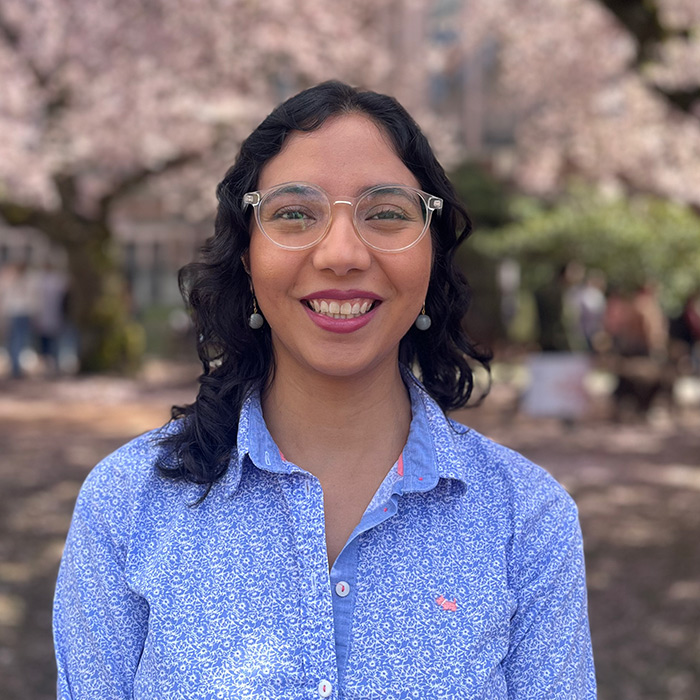
Outstanding Doctoral Student, Food Systems, Nutrition, and Health program
Norma Garfias Avila is a fourth-year PhD candidate in Nutritional Sciences from Tijuana, Mexico, whose commitment to nutrition science runs through her research, teaching, service, and the way she engages with the program itself. Norma’s research focuses on culturally relevant nutrition, food access, and the gut microbiome, her dissertation analyzing human trial data on how red and processed meat affects gut flora. She is also a passionate educator and is deeply involved in community-based public health work, including Health Frontiers in Tijuana, Friends of Fronteras Saludables, and several equity-focused initiatives at UW.
“I have worked with many talented graduate students over the years, and what makes Norma stand out is not raw talent, though she has plenty of that. It is that she shows up fully in every part of what our program asks of a graduate student,” said Michelle Averill, program director.
As a graduate student, Garfias Avila has an impressive teaching record. She has served as a teaching assistant for multiple undergraduate offerings, guest lectured in graduate student courses, and was appointed as the first PhD instructor of record for NUTR 200 (Nutrition Today), the largest course offered in the School of Public Health, with over 450 students enrolled during her quarter of instruction.
“She managed course delivery, led a team of teaching assistants, and built a learning environment that students described as welcoming and engaging, even at that scale. In a class that size, 88% of students reported she was ‘always’ respectful of diverse experiences,” said Averill.
Averill adds: “Norma was teaching content that included eating disorders and body image. That is hard material to handle well in a lecture hall of 462 and she handled it with care and skill. Students also noted her responsiveness to mid-course feedback, which tells me she is the kind of teacher who is still learning, not performing.”
Congratulations to our students!
June 1, 2026