News & Events
In the News

UW researchers launch ‘little free pantry’ mapping pilot, internet-connected pantries in Seattle
May 8, 2026 | UW News
Micropantries or community fridges throughout Seattle are the focus of a multi-disciplinary research team at UW which includes Food Systems, Nutrition, and Health faculty member Marie Spiker. This feature story by UW News highlights how the team is approaching data gathering to learn how much the pantries are used by placing weight and motion sensors.
Read article
What is food systems, nutrition, and health?
March 5, 2026 | UW Daily
The Daily, UW’s student newspaper, highlights the Food Systems, Nutrition, and Health major, citing the interdisciplinary aspects of the program and multiple opportunities students experience both in the classroom and through the capstone project.
Read article
My thoughts about the concerning new Dietary Guidelines for Americans
January 19, 2026 | The Seattle Times
Alumna Carrie Dennett (MPH/GCPD ’13) who is now working as a registered dietitian, nutrition therapist and body image counselor in the Pacific Northwest shares her thoughts on the new Dietary Guidelines for Americans in an article published in the Seattle Times. In the article, Dennet interviews FSNH faculty Marion Neuhouser who is head of the Cancer Prevention Program at Fred Hutch Cancer Center, and also served on the 2015-20 Dietary Guidelines Advisory Committee.
Read article
Marian Neuhouser elected to Washington State Academy of Sciences
July 17, 2025 | Washington State Academy of Sciences
Marian L. Neuhouser was elected as a member to the Washington State Academy of Sciences for her expertise in nutritional epidemiology and cancer prevention, including contributions to shaping U.S. dietary guidelines, advancements in biomarker methods, influence on public health policy, and lasting impact on cancer prevention, health equity, and scientific policy, and lasting impact on cancer prevention, health equity, and scientific policy.
Read article
Farming for the future: Building resilient food systems in a changing environment
January 5, 2026 | UW Center for Health and the Global Environment
Jennifer Otten is interviewed by the Center for Health and the Global Environment at University of Washington about the effects of environmental change on food systems, and offers a vision for what resilient food systems look like in practice. “A resilient food system is one that can absorb shocks like climate change, pandemics, and economic disruptions and still ensure equitable access to healthy food,” Otten said.
Read article
Households using more of the most popular WIC food benefits stay in the program longer, UW study finds
December 15, 2025 | UW News
New research has found that households who redeem more of their benefits in the most popular food categories are more likely to remain in the program long-term. Assistant Professor Pia Chaparro is first author on the study published in JAMA Network Open. “Finding ways to identify kids and families that are at risk of dropping out of the program is of high importance,” said Chaparro. “That’s basically what we’ve identified — a way to flag families who may be at risk of dropping off.”
Read article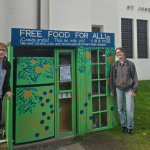
With community fridges, neighbors feed each other
December 5, 2025 | UW Environmental & Occupational Health Sciences
FSNH faculty Marie Spiker will collaborate with UW Urban Freight Lab to improve safety and efficiency of hyperlocal food sharing via community fridges that are accessible 24 hours a day for the public to take and leave food. “Because they’re decentralized, it’s hard to know whether a micropantry is full or empty, or whether a community fridge is at a safe temperature,” Spiker said. “The sensors and information dashboards this team is developing will go a long ways towards helping us understand the potential of micropantries to reduce waste and distribute food safely at a community level.”
Read article
Statewide effort to put more whole grains on shelves and plates gets $19 million boost
October 29, 2025 | UW News
New statewide initiative to put more healthy, climate-friendly grains on people’s plates will include faculty from the Food Systems, Nutrition, and Health program as the project’s implementation science team including Jennifer Otten, Sarah Collier, and Marie Spiker. The FSNH team will examine how innovations in grain breeding and food product development can be successfully adopted in school settings, and will study what policy, budgetary, and social factors help ensure that new whole grain and legume varieties are embraced across the supply chain and, ultimately, by school-aged children who rely on them for the nutrition they need to grow and thrive.
Read article
Wait, Are Carbs Actually Awesome?
October 9, 2025 | Men's Health
UW faculty member Adam Drewnowski is quoted in this article discussing perceptions about carbohydrate consumption, and helps clarify how to choose nutritionally optimal carbohydrates which can be beneficial to your diet and long term health.
Read article
Seattle to launch first connected network of community food micro-pantries
September 22, 2025 | UW Freight Lab
FSNH faculty member Marie Spiker is involved in this pilot research project that will retrofit existing micro-pantries in Seattle with sensors to create a “cyber-physical” network. The system will anonymously track pantry use, donation patterns, and food safety, giving communities real-time data to improve food distribution and reduce waste. The project also aims to strengthen safe, reliable food supply chains and foster collaboration between donors, volunteers, and recipients.
Read article