Food Systems, Nutrition, and Health
Food Security/Access
September 2, 2020
Auburn School District Summer Meals Evaluation
The purpose of the Auburn School District’s summer meal programs is to provide nutritious, free meals to children aged 18 and younger in low income during the summer months. Individuals and families with low income struggle to purchase necessities such as food. The inability to purchase adequate food due to limited resources is known as…
A Unified, Trusting Force: Recommendations for the Food Access and Aggregation Community Team
The Food Access and Aggregation Community Team (FAACT) is a coalition of food systems-based organizations operating in South King County, and supported by Public Health –Seattle; King County. The FAACT is engaged in the long-term planning of a community-led Farming and Food Aggregation Center. The ultimate goal of the Center is to increase the availability…
Reducing Food Waste in Emergency Food Organizations
Up to 40% of the U.S. food supply goes uneaten each year, yet more than 41 million people in the U.S. are food insecure. Additionally, at least 2.6% of all U.S. greenhouse gas emissions are created by food waste. The impractical food distribution that leads to these negative consequences affects the wellbeing of low-income communities,…
Strategies for Healthier and Culturally Relevant Food at King County Food Banks
The food bank and emergency food system in the United States requires rethinking. Northwest Harvest, a food bank distributor and anti-hunger organization in King County is transforming emergency food by moving away from a charity model to a social justice model. One of the ways this organization is moving to a social justice model is…
Social and Emotional Learning in the School Cafeteria
1 out of 7 children in the US are food insecure and uncertain where their next meal will come from. Children who experience food insecurity are at a higher risk for chronic disease, poor mental health, poor academic performance, and unfavorable health behaviors in adulthood. Encouraging school meal participation and creating a positive cafeteria environment…
Supporting the Local Food System During the COVID-19 Pandemic
The COVID-19 crisis has greatly impacted the King County local food system. Within a very short period of time, farmers were required to implement new operational practices with limited sources while also experiencing a cut in revenue due to the closures of farmers markets. In response to the difficulties local farmers were facing, a subset…
August 28, 2020
Changes to food system needed to reduce consumer food waste, new report says

Jennifer Otten, associate professor in the UW Nutritional Sciences Program co-authored this new report which identifies recommendations for reducing consumer food waste at a national level.
June 24, 2020
Statewide survey could map how COVID-19 is affecting food security, economics
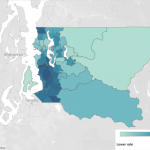
Research studying food security in WA state affected by COVID-19 is highlighted, featuring project leads Adam Drewnowski and Jennifer Otten. The study is conducted in partnership with Washington State University, Tacoma Community College, and partners in local, county and state governments.
Study asks Washington state residents to describe food security and access during pandemic, economic downturn

Online survey launched by Center for Public Health Nutrition gathers data on how the COVID-19 pandemic and subsequent economic downturn have affected food access and economic security to Washington state residents.
June 4, 2020
Experts across campus discuss future of food supply system

A review of a UW experts panel discussing impacts on the food supply featuring core faculty members Jennifer Otten and Adam Drewnowski.
Previous page Next page