Food Systems, Nutrition, and Health
Research & Practice
December 14, 2021
Washington state food assessment report: How the pandemic has affected food access
 New UW study commissioned by the Washington State Department of Agriculture shows the pandemic’s strain on Washington’s food access and food production systems. This DEOHS blog post highlights the team’s findings.
December 7, 2021
Survey of Washington state tribal communities illustrates how pandemic has exacerbated food disparities
 Project finds barriers to traditional foods access and major disparities in food insecurity among Washington state tribal communities during the COVID-19 pandemic A recent survey of American Indian/Alaska Native (AI/AN) individuals sheds further light on the disparate impacts of the COVID-19 pandemic among Washington State tribal communities. The project, the WA Tribal Food Survey (WATRIBAL),...
December 2, 2021
How a key nutritional program adapted to the pandemic
 As the COVID-19 pandemic created economic hardship and food insecurity for many families, a key governmental program for nutritional support pivoted to offer remote services and more flexible food options. As a result, participation and satisfaction with the program grew, according to findings from a new study by University of Washington researchers and the program,...
June 27, 2021
For many King County families, food aid ‘not nearly enough’ as need spikes in pandemic
 Food bank staff and public health officials predict it will take households several years to recover from food insecurity made worse by the economic instability of the pandemic. Ongoing research led by the UW Center for Public Health Nutrition in partnership with Washington State University and Tacoma Community College is highlighted.
May 11, 2021
Reliance on food assistance programs on the rise in Washington State
 Food insecurity remains high and disparities persist among Washington State households, while reliance on food assistance programs across the state have risen over the past six months, according to new data published by the University of Washington Center for Public Health Nutrition. The latest report from the WAFOOD research team compares data from two surveys,...
February 17, 2021
How the UW food pantry has adapted to rising food insecurity in the state
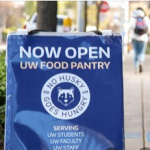 The Daily highlights how the UW Food Pantry is adapting to address food insecurity, and what UW Nutritional Sciences Program researchers involved in the WAFOOD survey have assessed thus far about state-wide food insecurity trends during the pandemic.
February 10, 2021
Michelle Obama is continuing her mission with a Netflix children’s show, ‘Waffles + Mochi’
 Former first lady Michelle Obama to expand the work she started with her “Let’s Move” campaign which helps kids eat better and live healthy lives. A UW study published this year in JAMA by Nutritional Sciences Program researchers is noted. The study authors include senior study author Jessica Jones-Smith, Kelsey Kinderknecht, and Cristen Harris. The...
January 26, 2021
WAFOOD survey receives support from the Paul G. Allen Family Foundation
 Among the several non-profit organizations and programs receiving recent emergency funding from the Paul G. Allen Family Foundation, the University of Washington Foundation has received a gift in support of the WAFOOD food insecurity survey. The Paul G. Allen Family Foundation has to date provided $12 million in emergency funding to provide relief to the...
January 25, 2021
New COVID-19 Grants to Boost Efforts Toward Economic and Social Relief
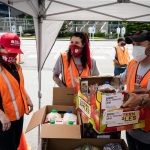 Paul G. Allen Family Foundation announces $1.4 million in emergency funding focused on getting the state’s underserved populations the food, child care, and stability they need most during this time. The gift includes direct support to the collaborative research by UW, WSU, and Tacoma Community College on food access in Washington State due to COVID-19.
January 4, 2021
Homeless youths in Seattle receive most meals from shelters and drop-in centers
 Over 75% of young adults experiencing homelessness in the greater Seattle area say they have enough food to eat, and most receive their weekly meals at shelters and drop-in centers, according to a recent study published in the Journal of the Academic of Nutrition and Dietetics. The study, which surveyed 122 youths aged 14-22 years...
Previous page Next page