Food Systems, Nutrition, and Health
CPHN
November 25, 2020
Nearly one-third of Washington households not getting enough food since start of pandemic: study
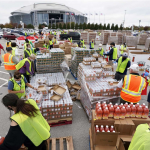 Findings from a study conducted by a research team from UW, WSU, and Tacoma Community College studied how the COVID-19 pandemic impacted economic and food security in Washington State are highlighted in this story from the Seattle P-I.
October 8, 2020
Research Shows the Importance and Paradox of Early Childhood Care and Education
 This story highlights research by Jennifer Otten that highlights the deep crisis ECCE providers and teachers face and how low wages force many to the brink of poverty. Many lack access to health insurance or paid sick or family leave.
Research Shows the Importance and Paradox of Early Childhood Care and Education
Dependable child care is critical for healthy development—and for the nation to return to work. However, costs are often unaffordable even while many child-care workers are not making a living wage. Ultimately, the entire nation faces the consequences of a system in crisis.October 7, 2020
UW and WSU collaborate to advance food systems education in Washington
 The University of Washington and Washington State University are embarking together on a project to strengthen and transform food systems education in Washington State. The two institutions have been jointly awarded a Higher Education Challenge planning grant by the National Institute of Food and Agriculture (NIFA), an agency of the U.S. Department of Agriculture (USDA)....
September 24, 2020
Food insecurity in Washington State highest among low-income groups and persons of color
 Food insecurity has spiked post Covid-19, affecting an estimated 30% of households in WA State and bringing many pre-existing social inequities to light. Highest rates were observed among households below the poverty line (58%), with some college education or less (44%), and for persons of color (42%). Households with children were also affected. Of the...
September 15, 2020
Food insecurity rates have more than doubled since start of COVID-19 pandemic
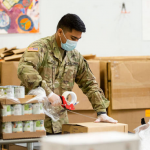 Since the onset of the pandemic, food insecurity rates have more than doubled in WA state, according to UW Nutritional Sciences and Center for Public Health Nutrition Center researchers who comment on the recently compiled the results from their first round of a statewide survey.
 September 4, 2020
Marie Spiker
 Dr. Marie Spiker is a registered dietitian and social scientist who conducts research at the intersection of public health nutrition and food systems. Dr. Spiker uses mixed methods research and systems science to study food security and its upstream determinants, food systems governance, food systems infrastructure, food loss and waste, and value chains for nutrition....
August 28, 2020
Changes to food system needed to reduce consumer food waste, new report says
 Jennifer Otten, associate professor in the UW Nutritional Sciences Program co-authored this new report which identifies recommendations for reducing consumer food waste at a national level.
August 19, 2020
Food label fight splits EU
 Adam Drewnowski comments on new food labeling proposed as a component of the ambitious European Green Deal.
Collaborating for health equity
 Nutritional Sciences core faculty members Jennifer Otten, Adam Drewnwoski, Sarah Collier, and Yona Sipos awarded population health equity research grants by the UW Population Health Initiative.
Previous page Next page