Food Systems, Nutrition, and Health
NSP
February 11, 2021
Dietetic interns at UW begin on-site clinical rotations
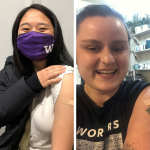 Graduate students in the University of Washington Graduate Coordinated Program in Dietetics began on-site clinical rotations in January, after receiving eligibility for the COVID-19 vaccination in December from UW Medicine, along with other UW students, postdocs, staff, and faculty members who work in a clinical setting. Anne Lund, director of the GCPD, says that this...
February 10, 2021
Michelle Obama is continuing her mission with a Netflix children’s show, ‘Waffles + Mochi’
 Former first lady Michelle Obama to expand the work she started with her “Let’s Move” campaign which helps kids eat better and live healthy lives. A UW study published this year in JAMA by Nutritional Sciences Program researchers is noted. The study authors include senior study author Jessica Jones-Smith, Kelsey Kinderknecht, and Cristen Harris. The...
February 1, 2021
New teaching position available in Food Systems, Nutrition, and Health
 The Nutritional Sciences Program within the School of Public Health at the University of Washington (UW) invites applications for one full-time (100% FTE) non-tenured faculty position at the rank of assistant teaching professor with an anticipated start date of July 2021. This new faculty position will provide teaching expertise in the areas of food systems,...
January 26, 2021
WAFOOD survey receives support from the Paul G. Allen Family Foundation
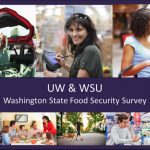 Among the several non-profit organizations and programs receiving recent emergency funding from the Paul G. Allen Family Foundation, the University of Washington Foundation has received a gift in support of the WAFOOD food insecurity survey. The Paul G. Allen Family Foundation has to date provided $12 million in emergency funding to provide relief to the...
January 25, 2021
Allen Family Foundation boosts COVID-19-related funding for hard-hit areas in Washington State
 UW Center for Public Health Nutrition research receives gift from Paul G. Allen Family Foundation, supporting the Washington State Food Security (WAFOOD) Survey, a project studying impacts of COVID-19 on food access and nutrition in Washington State.
New COVID-19 Grants to Boost Efforts Toward Economic and Social Relief
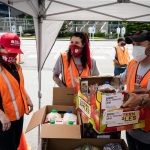 Paul G. Allen Family Foundation announces $1.4 million in emergency funding focused on getting the state’s underserved populations the food, child care, and stability they need most during this time. The gift includes direct support to the collaborative research by UW, WSU, and Tacoma Community College on food access in Washington State due to COVID-19.
The Paul G. Allen Family Foundation Continues Support for Vulnerable Communities During COVID-19
 New support will boost efforts toward economic and social relief to those experiencing disproportionate impacts of the COVID-19 pandemic, including the University of Washington WAFOOD survey.
January 4, 2021
Homeless youths in Seattle receive most meals from shelters and drop-in centers
 Over 75% of young adults experiencing homelessness in the greater Seattle area say they have enough food to eat, and most receive their weekly meals at shelters and drop-in centers, according to a recent study published in the Journal of the Academic of Nutrition and Dietetics. The study, which surveyed 122 youths aged 14-22 years...
Washington researchers start second round of food security surveys amid coronavirus pandemic
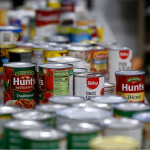 Jennifer Otten is quoted in this story that highlights wave 2 of the Washington Food Security Survey which monitors the continuing impact of the pandemic on economic- and food-related wellbeing, eight months after the initial lockdown in the state.
January 2, 2021
Need for free food in Washington state has doubled, many groups report, as COVID-19 rips away jobs and security
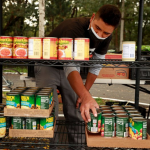 Every level of the food distribution chain in the state of Washington has been challenged since the pandemic began, and this article illustrates how different food assistance organizations are faring. The WAFOOD survey and study from researchers in the UW Center for Public Health Nutrition, WSU and Tacoma Community College are mentioned, and how the...
Previous page Next page