News
News

Article authored by UW professor highlights food insecurity root causes
August 12, 2022
This September, the White House will convene a conference on hunger, nutrition, and health. Leading up to the conference, the White House is organizing several listening sessions across America to hear firsthand from people impacted by food insecurity and to collect ideas about how to end hunger and hunger-related diseases and disparities. Ahead of this...
Read more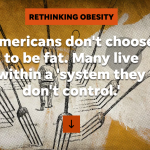
What’s to blame for Americans’ obesity problem? Start with the system.
July 26, 2022 | USA Today
“Obesity can vary by 600% depending on a person’s address,” said Dr. Adam Drewnowski who contributes to this USA Today article discussing the multifactorial issues contributing to the American obesity epidemic.
Read article
Sweetened beverage taxes produce net economic benefits for lower-income communities
July 8, 2022 | UW News
New study from University of Washington Center for Public Health Nutrition examines the economic equity impacts of sweetened beverage taxes in three cities: Seattle, San Francisco and Philadelphia. Jessica Jones-Smith was co-prinicipal investigator and Lina Pinero Walkinshaw was a co-author on the study.
Read article
Pandemic disrupts food access for tribal communities
January 24, 2022 | DEOHS Blog
DEOHS Blog highlights how tribal communities in Washington state experienced food insecurity during the pandemic, according to according to a new report by researchers at the Northwest Tribal Epidemiology Center (NWTEC), a division of the Northwest Portland Area Indian Health Board, the University of Washington and Tacoma Community College.
Read article
Survey shows disproportionate food insecurities in Washington tribal communities
January 20, 2022 | UW Population Health
Highlights findings from a recent study, WATRIBAL, which shows the significant impact of the COVID-19 pandemic on food disparities and food sovereignty among American Indian/Alaska Native communities in Washington State.
Read article
New Evidence Suggests That Seattle’s Soda Tax Is Working — and It’s Working Well
January 11, 2022 | The Patch
A study in Baltimore which uses grocery store sales data bolsters early evidence published by UW Center for Public Health Nutrition, supporting the that the Seattle soda tax is working. Jessica Jones-Smith, lead researcher involved in the UW research is quoted.
Read article
Resiliency of food systems during COVID-19
January 10, 2022 | KOMO Radio
A UW study focuses on the adaptations made to keep food systems going during the pandemic. It found a third of farmers formed new working relationships while coping with supply chain failures, worker shortages and more.
Read article
Studies show how the pandemic pushed the food system to the brink
January 9, 2022 | GoSkagit.com
UW researchers published a study commissioned by the state Department of Agriculture that focused on the resiliency of the state’s food system during the pandemic, and the adaptations made by the system.
Read article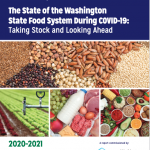
Studies show extent of strain to Washington’s food access and food production systems due to COVID-19
December 14, 2021 | Washington State Department of Agriculture
A UW study commissioned by the Washington State Department of Agriculture (WSDA) by researchers in the Center for Public Health Nutrition in the UW School of Public Health demonstrates how the COVID-19 pandemic affected access to food in Washington, in the areas of both food production and food assistance, and how the state can learn from the pandemic and take advantage of new opportunities.
Read article
Washington state food assessment report: How the pandemic has affected food access
December 14, 2021 | Department of Environmental and Occupational Health Sciences
New UW study commissioned by the Washington State Department of Agriculture shows the pandemic’s strain on Washington’s food access and food production systems. This DEOHS blog post highlights the team’s findings.
Read article