Food Systems, Nutrition, and Health
NSP
September 18, 2019
Anne Lund
 Anne Lund, MPH, RDN, FAND is the director of the University of Washington’s Graduate Coordinated Program in Dietetics and the director of the MPH Nutrition degree. She joined the core faculty of the Food Systems, Nutrition, and Health program (formerly Nutritional Sciences Program) and Department of Epidemiology in 2009. Prior to becoming the dietetic program...
Students honored at program celebration
 On Friday, August 23, we gathered to celebrate the work and achievements of students who will graduate in 2019 from our PhD, master’s, and Graduate Coordinated Program in Dietetics programs. Poster sessions were presented by candidates who completed concentrations in Medical Nutrition Therapy or Public Health, and students were also individually recognized by faculty, staff...
September 3, 2019
Shirley A.A. Beresford
 Dr. Beresford’s research interests are in the areas of nutritional epidemiology, social epidemiology, and chronic disease prevention. Her work is specifically designed to improve the scientific basis for public health policy and recommendations concerning dietary intake, physical activity, and folic acid status. She has been Principal Investigator on numerous individual and group randomized trials of...
August 15, 2019
Reducing food waste at UW
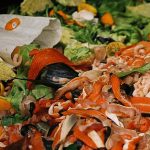 Students in Nutrition 302, taught by core faculty member Yona Sipos, joined with the UW Sustainability program to identify ideas the University of Washington could reduce food waste.
August 2, 2019
Jennifer Otten joins national food waste committee
Jennifer Otten, an associate professor in environmental and occupational health sciences and a core faculty member in the Nutritional Sciences Program in the UW School of Public Health has joined a new committee formed by the National Academies of Sciences, Engineering, and Medicine (NASEM), which will conduct a systematic review of consumer food waste and...July 24, 2019
Jeani Hunt-Gibbon named Outstanding Student in Women’s Health
Jeani Hunt-Gibbon, a graduate student in the Nutritional Sciences Program has been named Outstanding Student in Women’s Health for 2019 by Women’s Health, a Dietetic Practice Group (WH DPG) of the Academy of Nutrition and Dietetics. The recognition honors Hunt-Gibbon’s work in producing a lecture on nutrition and fertility for her MS Capstone project. She...July 9, 2019
Ivory Loh receives Husky Seed Fund for cookbook project
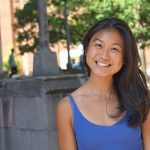 Ivory Loh, a graduate student in the Nutritional Sciences Program has been awarded the 2019 Husky Seed Fund to produce a Husky Cookbook, a collection of recipes gathered from UW students, staff and faculty. The project aims to unite members across the broader UW community through food and their stories told through food. Loh’s hope...
July 3, 2019
Nutrition expert: Food labeling needs harmonised and nutrient-rich profiling
Adam Drewnowski, a professor of epidemiology, director of center for public health nutrition, and director of nutritional sciences at University of Washington suggests that policymakers should adopt harmonized nutrient-rich profiling on food labeling in order to address this.May 26, 2019
13 Simple Changes That Lead to Huge Weight Loss
 Adam Drewnowski and Judy Simon are quoted in this article, offering strategies for weight loss that help you eat healthier and stay on track. Drewnowski is director of the University of Washington Center for Public Health Nutrition and director of the UW Nutritional Sciences Program. Simon is a registered dietitian with UW Medical Center and...
May 16, 2019
Adam Drewnowski
 Dr. Adam Drewnowski’s interests are in nutritional epidemiology, socioeconomic determinants of obesity and diet-related chronic disease, relation between diet quality and diet cost, and sustainable nutrition security as it relates to climate change. He has developed new value metrics to study nutrient density, affordability, and carbon footprint of individual foods and total diets. Dr. Drewnowski...
Previous page Next page