Food Systems, Nutrition, and Health
NSP
March 14, 2024
Public health nutrition student practicums support city and state health initiatives
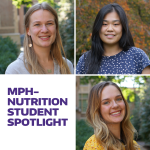 In recognition of National Nutrition Month®, we spotlight three Master of Public Health in Public Health Nutrition (MPH-Nutrition) students in the University of Washington School of Public Health who are working on local initiatives and programs in winter internships that relate to food security, food access, community health, and food sovereignty. MPH-Nutrition second year students...
February 12, 2024
Nutritional Sciences Program changes name to Food Systems, Nutrition, and Health
 The University of Washington Nutritional Sciences Program is now known as the Food Systems, Nutrition, and Health Program, effective Jan. 1, 2024. The renaming process began before the pandemic when program faculty and stakeholders suggested that a new name could better align with the program’s mission; the scope of its current educational programs, teaching and...
November 29, 2023
UW study abroad course explores sustainable food systems in Italy
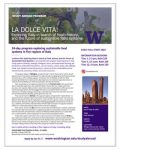 This 24-day program is offered in early fall start 2024 and explores sustainable food systems in five regions of Italy. Interested? Attend an Information Session All sessions will be held in Raitt 229 About the Program La Dolce Vita: Exploring Italy in Search of Food, History, and the Future of Sustainable Food Systems is an...
October 11, 2023
New paper illustrates complexity of food systems data and how to close gaps
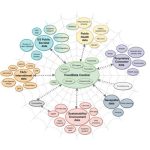 How do we support and transform sustainable food systems while maintaining and improving the nutritional status of the population? This question has become a global public health priority for international organizations, funders, academics, and policymakers. Because food systems data are so transdisciplinary and intersect many domains such as health, nutrition, economics, society, and environment, creating...
September 25, 2023
Opening Week events highlighting Food Systems at UW
 Don’t miss the following Dawg Daze events for 2023! These events will give you an introduction to Food Systems efforts happening on campus, as well as options for studying food systems at the University of Washington. Food Systems, Nutrition, and Health Major Information Session In the Food Systems, Nutrition, and Health Major we are looking...
August 21, 2023
Michelle Averill named interim director of UW Nutritional Sciences Program
 Dr. Michelle Averill has been named interim director of the University of the Nutritional Sciences Program (NSP) in the School of Public Health. Averill currently serves as an associate teaching professor in environmental and occupational health sciences at the School and has served as the associate director of the Graduate Coordinated Program in Dietetics since...
August 18, 2023
Celebrating UW nutritional sciences graduates completing MPH, MS, and RDN training in 2023
 Congratulations to our graduate students finalizing their MPH and MS degrees, as well as to those completing their RDN training through the Graduate Coordinated Program in Dietetics (GCPD) in 2023. On Friday August 18, the University of Washington Nutritional Sciences Program (NSP) faculty and staff gathered with the graduates and their families to celebrate and...
May 25, 2023
Food Systems Capstone Celebration is June 1
 A reception for students in the spring quarter NUTR 493 Food Systems Capstone course will be held Thursday, June 1 from 2:30-4:00 p.m. on the second floor of the Hans Rosling Center for Population Health following student final presentations. The reception celebrates the students in the course, faculty, staff, and community partners who collaborated with student...
May 24, 2023
Nutritional Sciences students recognized for leadership and service
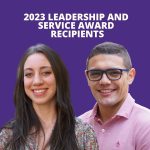 Congratulations to Nutritional Sciences Program graduate students Jonathan Lara-Arévalo and Paola Maria Bregni Ibarra who were selected for 2023 program awards recognizing excellence in leadership and service. Recipients are selected by Nutritional Sciences students, staff, and faculty members. Jonathan Lara-Arévalo Recipient of the 2023 Carrie Cheney Student Leadership Award Jonathan Lara-Arévalo, a University of Washington...
May 23, 2023
Nutritional sciences students honored for excellence
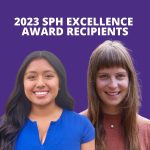 Congratulations to Kayla Guzmán and Andrea Litzow, Nutritional Sciences Program students who were honored with 2023 School of Public Health (SPH) Excellence Awards, an annual recognition that spotlights exemplary faculty, staff and students. Winners were announced on Tuesday May 23. This year’s recipients in the Nutritional Sciences Program have demonstrated high academic achievement and have...
Previous page Next page